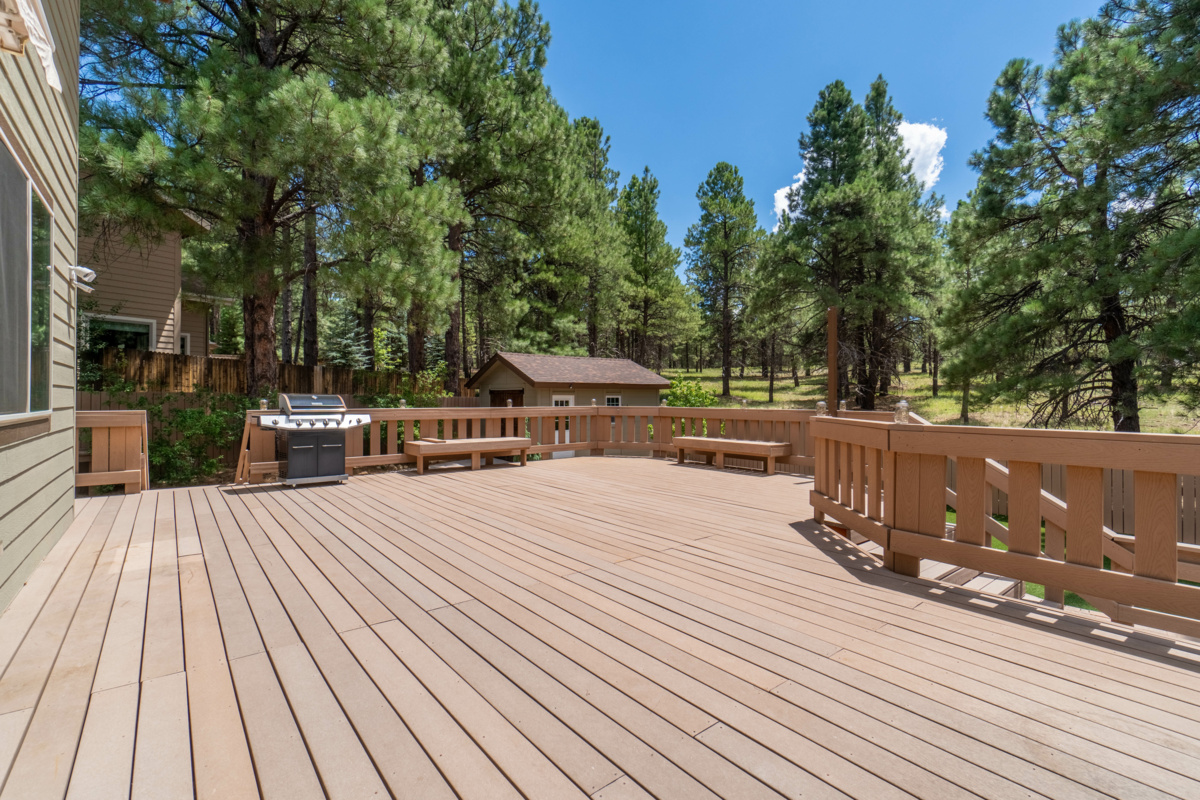
Most homeowners who call us about a failing deck assume the boards are the problem. Nine times out of ten, the boards are fine and the frame underneath has rotted out. That single detail changes the whole wood vs composite decking conversation, because surface material only tells part of the durability story.
Our team has installed and repaired exterior products across the Kansas City metro since 2003. Here is the honest comparison, including the parts manufacturer websites tend to leave out.
Decking Material Comparison at a Glance
| Pressure-Treated Wood | Capped Composite | PVC | |
| Surface lifespan | 10 to 15 years | 25 to 50 years | 30 to 50 years |
| Upkeep | Stain or seal every 2 to 3 years | Wash twice a year | Wash twice a year |
| Upfront cost | Lowest | Moderate to high | Highest |
| Refinishable | Yes | No | No |
| Summer surface heat | Coolest | Warm | Warm |
Key Takeaway: Composite outlasts wood by roughly two to three times, though the frame beneath both materials carries the same 15 to 25 year lifespan.
How Long Each Decking Material Actually Lasts
Pressure-Treated Pine, Cedar, and Redwood
Pressure-treated pine runs 10 to 15 years in our climate. Cedar reaches 15 to 20 years, redwood 20 to 25, and tropical hardwoods like ipe can pass 40 with care.
Maintenance compliance drives those numbers more than species does. A sealed, well-drained pine deck can reach 20 years. A neglected one goes soft in eight.
Capped Composite and PVC
Capped composite carries a polymer shell bonded over a wood-flour core, which blocks rot, insects, and moisture absorption. Expect 25 to 50 years.
Older uncapped composite from the early 2000s is a different product entirely. It faded badly, grew surface mold, and led to several class-action settlements. If your composite deck looks chalky and streaked, that is usually why.
Pro Tip: Ask any contractor whether the composite they quote is capped on three sides or four. Four-sided capping protects the board edges where water sits longest.
The Frame Under Your Deck Decides Everything
Where Decks Fail First
Joists, beams, posts, and the ledger board are pressure-treated lumber no matter which surface you pick. That framing typically lasts 15 to 25 years.
Ledger board flashing failure is the number one structural problem we find, and it is a genuine safety issue rather than a cosmetic one. During inspections we also look for soft joist tops, rusted joist hangers, and loose rail posts.
How We Protect the Substructure
Installing 50-year composite over a 20-year-old frame wastes money. A few steps extend frame life considerably:
- Joist tape applied along every joist top
- Correct ledger flashing tied into the wall system
- Stainless or coated hangers and fasteners
- Ventilation and drainage clearance under the deck
If you already have soft framing or rot showing near the house connection, our wood rot repair work addresses that before any new decking goes down.
What Kansas City Weather Does to Each Material
Freeze and Thaw Cycles
Winter here delivers dozens of freeze and thaw swings. Water enters checked wood grain, freezes, expands, and splits boards open a little more each season. Composite absorbs almost no moisture, so it sidesteps that cycle.
Ice melt matters too. Chloride products break down wood fiber and can stain composite. Calcium magnesium acetate is the safer choice.
Summer Heat and Humidity
July afternoons push composite surface temperatures 20 to 35 degrees above ambient. On a 98-degree day, that gets uncomfortable for bare feet, especially on dark colors.
Humidity feeds mildew on both materials. On wood, it becomes rot. On composite, it stays on the surface and washes off.
Key Takeaway: Composite wins on longevity in our climate by a wider margin than national averages suggest. Lighter colors and shaded areas solve most of the heat complaint.
The Real 25-Year Cost of Wood vs Composite Decking
Sticker price favors wood. Total ownership cost usually does not.
For a 320 square foot deck over 25 years:
- Wood: lower installation, then roughly $400 to $850 per year in contractor staining, sealing, and board replacement, plus full replacement around year 15.
- Composite: higher installation, then $5 to $15 per year in cleaning supplies, with no mid-life replacement.
DIY changes that math. Homeowners who stain their own decks cut wood upkeep costs dramatically. Sale timing matters as well, since composite’s advantage narrows if you plan to move within seven years.
Need expert help with your deck project? Contact Energy Pro Windows & Siding at (816) 331-7403 for a free, no-pressure consultation. Financing options are available with approved credit.
Warranty Fine Print Most Homeowners Skip
A 50-year warranty rarely means what it appears to mean. Before you sign, confirm these four points:
- Structural coverage and fade or stain coverage are separate policies with different terms
- Most warranties are prorated, so year 30 coverage is worth a fraction of year one
- Transfers to a buyer are usually limited to one, often at reduced length
- Improper joist spacing, wrong fasteners, or poor ventilation can void coverage entirely
Installation errors void more warranties than product defects ever trigger. That is why we handle framing and flashing details ourselves rather than subcontracting them out.
Pro Tip: Request the full written warranty document, not the brochure summary, before you approve any deck contract.
Which Material Fits Your Home?
Wood vs Composite Decking: A Quick Decision Guide
Choose wood if you want the lowest upfront cost, plan to sell within five to seven years, or genuinely do not mind annual maintenance.
Choose composite if you are staying ten years or longer, want weekends back, or are already replacing the substructure.
Choose PVC if the deck sits in full sun, surrounds a pool, or faces constant moisture.
What We See on Kansas City Projects
Most “my deck is failing” calls we receive turn out to be ledger and joist problems on decks with perfectly serviceable boards. Homeowners who invest in framing protection get far more years out of either surface.
Frequently Asked Questions
Does composite decking really last 50 years?
Capped composite reasonably reaches 25 to 50 years. Reaching the upper end requires a properly built and protected frame underneath.
Can I put composite over my existing wood frame?
Only after inspection. If the framing has more than five to seven years left and shows no rot, resurfacing works well.
Does composite decking fade?
Capped products fade slightly over decades. Uncapped older products fade severely.
Ready to Build a Deck That Lasts?
Deck longevity comes down to three things: the right surface material, a protected frame, and correct installation. We handle all three.
Call (816) 331-7403 or request your free quote and our team will inspect your existing structure, walk you through real numbers, and help you settle the wood vs composite decking question for your specific home.