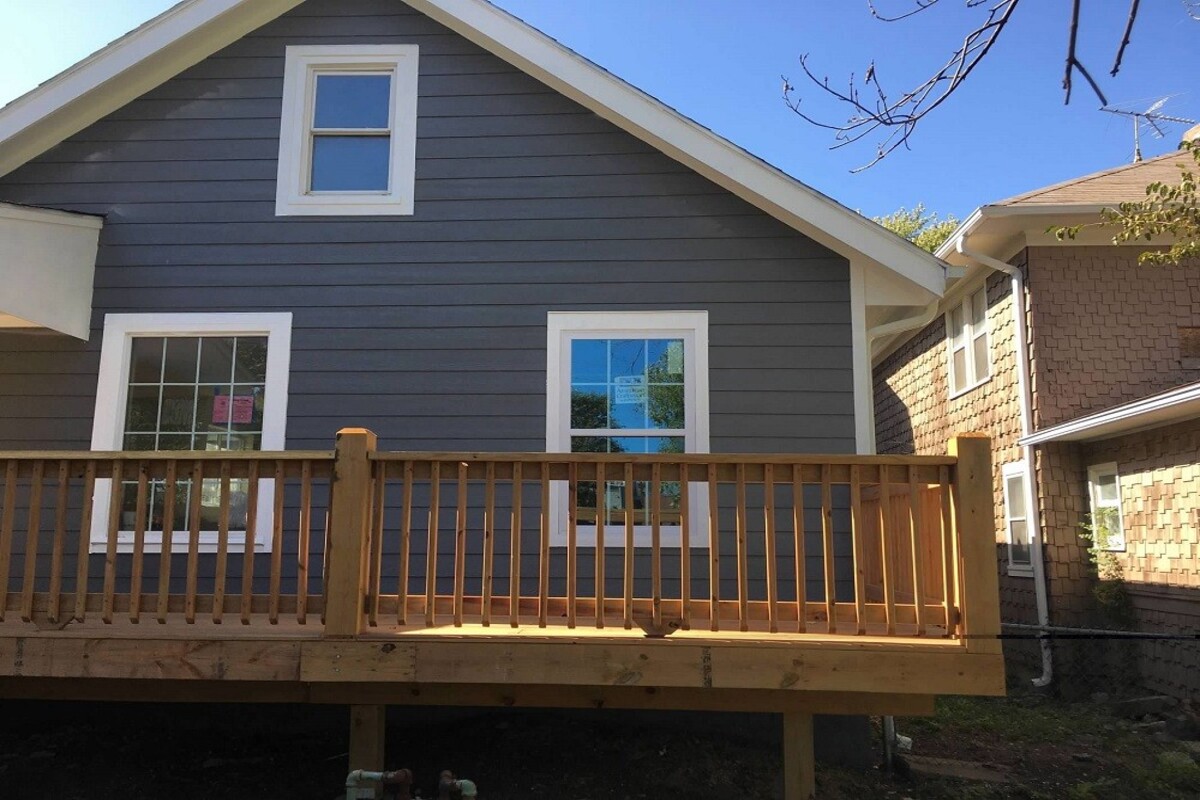
Deck quotes in the Kansas City metro often vary by thousands of dollars, even when the decking boards are identical. The difference sits underneath the surface. The most expensive part of a deck is labor, which typically accounts for 50 to 60 percent of the total project cost on a pressure-treated build.
The rest of your budget goes toward framing, footings, railing, stairs, and hardware. Knowing that split ahead of time is what separates a bid you can trust from one that surprises you halfway through the build.
Labor is the Most Expensive Part of a Deck
On a standard attached deck in the Kansas City metro, the cost usually breaks down close to this:
- Labor: 50 to 60 percent of the total
- Decking surface: 15 to 20 percent
- Substructure and framing: 10 to 15 percent
- Railing and stairs: 8 to 12 percent
- Permits, inspections, and disposal: 3 to 5 percent
Those percentages hold for pressure-treated lumber. Move up to a premium composite or PVC surface, and labor drops closer to 35 to 45 percent, because the boards themselves cost so much more.
Key Takeaway: Cheaper decking boards do not reduce your labor hours. They only make labor a larger share of a smaller total.
Why Deck Labor Costs So Much in Kansas City
Labor is not one line item. It is a stack of code requirements, inspections, and site conditions that vary house to house.
Footings Have to Beat the Frost Line
Frost depth across the Kansas City metro generally ranges from 30 to 36 inches, with Kansas City, Missouri, commonly cited at 36 inches. Every pier has to be dug that depth below, and in most jurisdictions a footing inspection has to pass before any concrete is poured.
That means excavation in heavy clay soil, a scheduled inspection, and a hard stop in the build calendar. Footings alone can take a full day or more of crew time.
Framing and the Ledger Connection
The ledger board is the piece that attaches your deck to the house, and it carries a significant share of the load. It has to be fastened with the right hardware and flashed properly where it meets the wall.
Code also requires a separate lateral load connection at the ledger, usually hold-down hardware rated at 1,500 pounds that ties the deck framing back into the house framing. The parts are inexpensive. The installation time is not.
A poorly flashed ledger is one of the most common causes of hidden rot in the band joist and the wall behind your siding. Our team repairs that damage regularly, and it almost always costs more than doing the detail right the first time.
Pro Tip: The footing inspection is a free structural review by your city. Ask your contractor when it is scheduled and plan to be home for it.
Height, Slope, and Access
An elevated deck needs taller posts, additional bracing, and a stair run with a landing. Raised decks also draw closer plan review, which adds time before a single board gets cut.
A sloped or tight backyard where a crew cannot back a truck in adds hours to every phase. Material gets carried in by hand, and footing spoil goes out the same way.
Material Costs and What Moves the Number
Materials are the second largest cost on most decks, and on premium composite or PVC builds they can pull even with labor.
Decking Boards by Price and Lifespan
Typical 2026 material costs per square foot, boards only:
- Pressure-treated pine: $2 to $6, roughly 10 to 15 years with regular sealing
- Cedar: $4 to $9, roughly 15 to 20 years with maintenance
- Capped composite: $5 to $18, roughly 25 to 30 years with minimal upkeep
- PVC: $9 to $15, 30 years or more
- Ipe and exotic hardwood: $10 to $25 and up
Kansas City humidity, freeze and thaw cycles, and summer sun are hard on wood. Pressure-treated boards that never get sealed start checking and graying within a few seasons, and most wood decks need board replacement well before year 15.
Railings and Stairs
Railing is priced by the linear foot, generally $35 to $120 installed depending on material, and it regularly accounts for 10 to 20 percent of a project. Cable and glass sit at the top of that range.
Stairs are priced by the step or by the flight rather than by the deck. A bid that looks competitive often assumes a basic railing package and a short stair run.
Key Takeaway: Compare decking over 15 years, not at purchase. Staining and sealing a wood deck runs a few hundred dollars every year or two, which is why composite usually costs less across the life of the deck.
Ready to talk numbers for your yard? Contact Energy Pro Windows and Siding at (816) 331-7403 for a free, no-pressure consultation and a written estimate. Financing is available with approved credit.
The Costs Homeowners Forget to Budget For
Permits, Inspections, and Site Work
Belton, Overland Park, Olathe, Lee’s Summit, and Kansas City each run their own building departments with separate fees and review timelines. Permit costs commonly land between $230 and $500.
Tearing out and hauling away an old deck is a separate line item, and so is repairing the grading and landscaping afterward.
Where the Expensive Part of a Deck Hides in a Low Bid
A low bid is usually low because something is missing from the scope. Watch for these:
- Permit fees, and who is responsible for pulling the permit
- Demolition and disposal of the existing deck
- Stair landings, handrails, and the full stair run
- Railing grade, since upgrading later costs more than choosing it now
- Restoring the yard after the work is finished
Where to Spend and Where to Save
Never Cut Corners Here
- Footing depth and diameter
- Framing lumber grade and joist spacing
- Fasteners and structural hardware
- Ledger flashing and the wall detail
- The crew doing the installation
Safe Places to Trim the Budget
- Reduce the square footage, which is the single biggest lever
- Keep the shape simple and skip multi-level designs
- Phase in lighting and built-in seating later
- Choose a standard railing instead of cable or glass
Square footage carries the most weight because every foot you remove takes framing, footings, decking, and labor with it.
Pro Tip: Ask every bidder the same five questions. Footing depth, joist spacing, hardware brand, how they are flashing the ledger, and who pulls the permit. The answers tell you more than the price does.
Build It Once and Build It Right
A deck is a structure attached to your home, and the connection between the two is where quality shows up years later. Energy Pro Windows and Siding has served Kansas City homeowners since 2003, and our crews carry more than 125 years of combined experience across decks, siding, windows, and wood rot repair.
Call us at (816) 331-7403 or request a free quote online, and we will walk you through your options, your timeline, and exactly why labor remains the most expensive part of a deck.