One of the most common questions we hear about window rot is whether it can be stopped. It can, if you catch it early, fix the moisture source, and remove all decayed wood.
Deep rot in the jambs or framing usually means replacement. Here’s how to check the damage, how window wood rot repair works, and how to keep rot from returning.
What Causes Window Wood Rot?
Wood rot is caused by fungi that feed on the fibers that give wood its strength. These fungi can’t get started in wood kept below about 20% moisture content. They need moisture near 30% or higher to take hold.
Where the Water Comes From
- Cracked paint and shrunken caulk around the frame
- Sills that slope toward the house instead of away
- Overflowing gutters dumping water onto the windows below
- Missing or failed flashing
- Winter condensation running down the glass onto the sash
Why Kansas City Homes See More of It
Humid summers, wind-driven spring storms, and freeze-thaw winters crack paint and open up joints. Many older homes in Overland Park, Lee’s Summit, and Olathe still have original wood windows that have been through decades of these cycles.
Pro Tip: “Dry rot” is a misleading name. All rot starts with moisture, so finding the water source always comes before any repair.
How to Tell How Bad the Rot Is
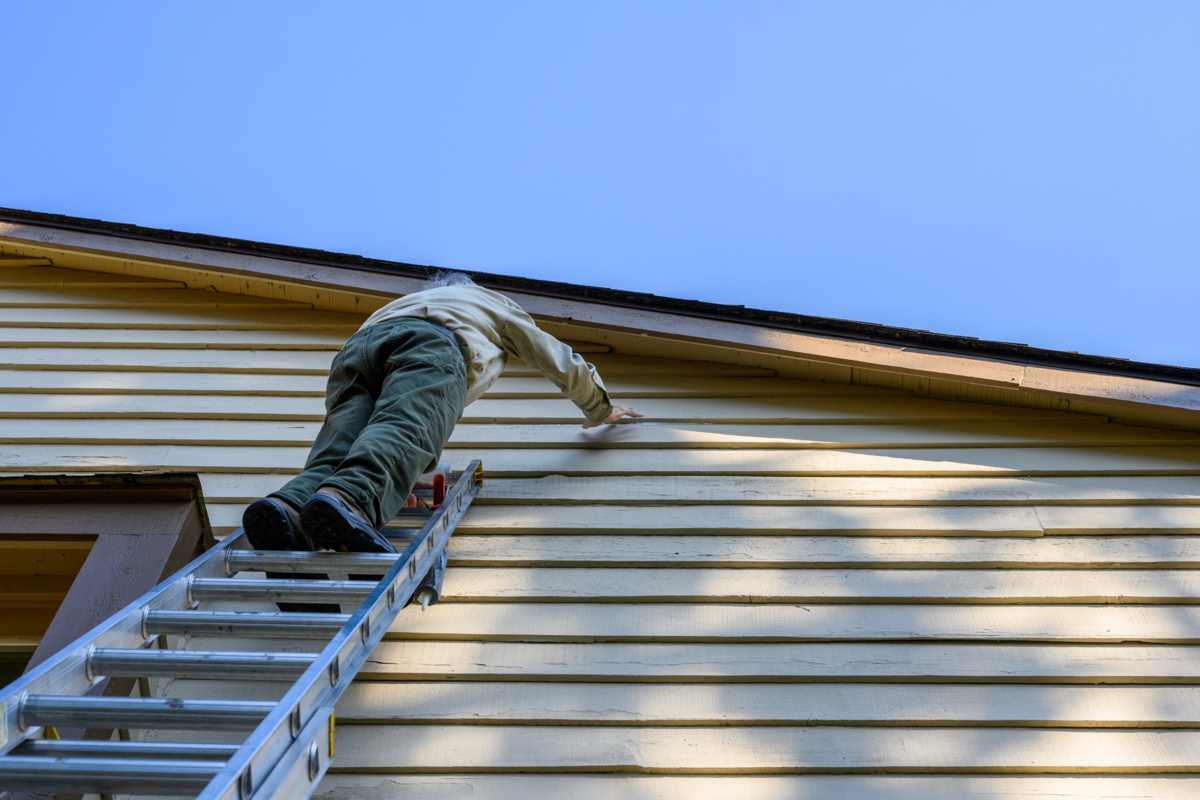
The earlier you find rot, the more likely it can be repaired. Here’s how to check.
Warning Signs to Look For
- Peeling or bubbling paint on the sill or lower sash
- Dark stains that don’t wipe off
- Soft spots that give under your thumb
- A sash that sticks, sags, or won’t lock
- A musty smell or water stains on the wall below the window
The Screwdriver Test
Press a flathead screwdriver into the suspect area. Healthy wood resists the tip. Rotted wood lets it sink in and breaks off in short, crumbly pieces. As a rough guide:
- Less than 1/4 inch: surface rot, usually repairable
- 1/4 to 1/2 inch: moderate rot, often repairable if the surrounding wood is solid
- More than 1/2 inch, or the tip pushes through: advanced rot, likely needs replacement
Sill, Frame, or Sash?
Location matters as much as depth. A rotted window sill or soft sash corner is often fixable. Rot in the side jambs or the wall framing usually means water is getting behind the window, and a patch won’t solve that.
Key Takeaway: As a rule of thumb, if more than about a third of a sill, jamb, or sash rail is soft, repair rarely makes sense.
Our Window Wood Rot Repair Process
Every lasting repair follows the same order, and it’s the process behind our wood rot repair service. Skipping a step is the main reason rot comes back.
Safety note: If your home was built before 1978, test the paint or assume it contains lead. Any contractor you hire must be EPA RRP-certified. If you do the work yourself, follow lead-safe practices before any scraping or sanding.
- Stop the water. Fix the caulk, flashing, gutter, or condensation problem first.
- Dry the wood. Epoxy won’t bond to wet wood, so we wait until moisture readings drop below the epoxy maker’s limit, typically around 15% or less.
- Cut out all the rot. All crumbling, decayed wood comes out, down to solid material.
- Treat with borate. A borate preservative kills remaining decay fungi in the surrounding wood. Let it dry before moving on. Borates are water-soluble and wash out of exposed wood, which is why the final sealing step matters.
- Harden and fill. A liquid epoxy consolidant soaks into and hardens any slightly softened fibers at the edges. Two-part epoxy filler then rebuilds the original shape, and large voids get a new piece of wood glued in.
- Prime, paint, and seal. Exterior primer, two coats of paint, and fresh caulk lock moisture out.
Pro Tip: Skip standard wood putty, which shrinks, cracks, and soaks up water. Two-part epoxy holds its shape and resists moisture for years.
Should You Repair or Replace a Rotted Window?
The right choice depends on how deep the damage goes and how well the window still works.
When Repair Makes Sense
- The rot is shallow and limited to one area
- The window opens, closes, and locks properly
- The frame and jambs are still solid
When Replacement is the Better Investment
- Window frame rot runs the length of the sill or into the jambs
- The glass is loose or the sash sags
- Rot has come back after an earlier patch
- The window is single-pane or drafty
In these cases, a new energy-efficient window solves the rot problem and lowers your heating and cooling bills at the same time.
What Affects Window Wood Rot Repair Cost
Price depends on how much wood has to come out, how many windows are affected, whether lead-safe practices are required, and whether hidden damage turns up behind the trim. A small sill repair costs far less than a new window. Patching a deeply rotted, drafty window often costs more over time than replacing it, once repeat repairs and energy loss add up.
Need expert help with rotted windows? Contact Energy Pro for a free in-home consultation.
How to Keep Rot From Coming Back
A few simple habits protect a repair for years.
Exterior Maintenance
- Inspect paint and caulk every spring and fall
- Repaint exterior wood every 5 to 7 years
- Keep gutters clear, or add gutter guards to prevent clogs
Indoor Moisture Control
- Run bath and kitchen exhaust fans
- Wipe winter condensation off sills and sashes
- Keep indoor humidity around 30% to 40% in cold months, and lower it if condensation appears
Pro Tip: Vinyl frames can’t rot, and clad-wood frames resist it far better than painted wood. Both cut most of this upkeep, though proper flashing still matters to protect the wall around the window.
Frequently Asked Questions
Will wood rot spread if I leave it alone?
Yes. As long as the wood stays damp, the fungus keeps spreading into the jambs, the sash, and eventually the wall framing.
Can I paint over wood rot?
No. Paint traps moisture inside the decayed wood and hides the damage while it gets worse.
Can I fix window rot myself?
Small surface rot is a reasonable DIY job. If your home was built before 1978, test the paint for lead first or follow lead-safe practices (see the safety note above). Deep rot or rot in the jambs needs a professional inspection to check for hidden damage.
Get an Honest Answer From a Local Team
Window rot only gets more expensive the longer it sits. Catching it early gives you the most options and the lowest cost.
Since 2003, Energy Pro Windows & Siding has helped Kansas City homeowners choose between repair and replacement with straight answers and no pressure. We hold a 4.9-star Google rating and BBB A+ accreditation.
Schedule a free in-home consultation to find out whether your home needs new windows or a simple window wood rot repair.