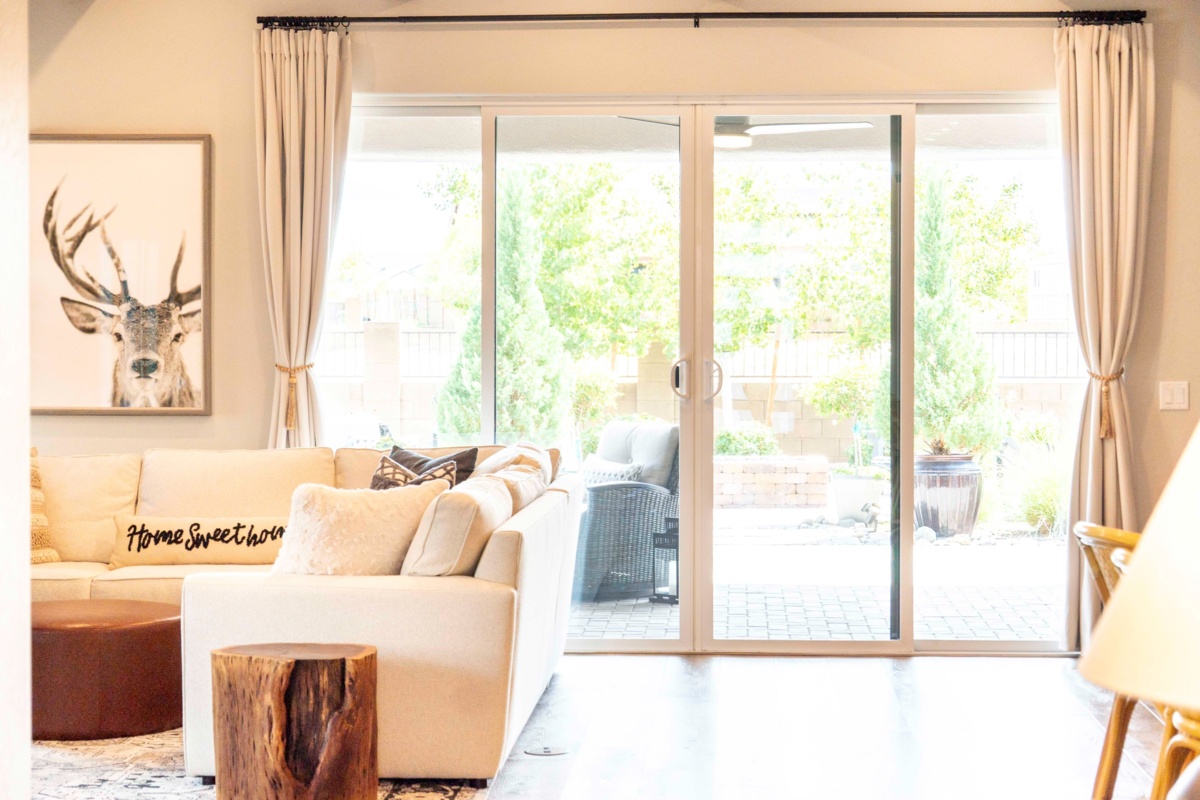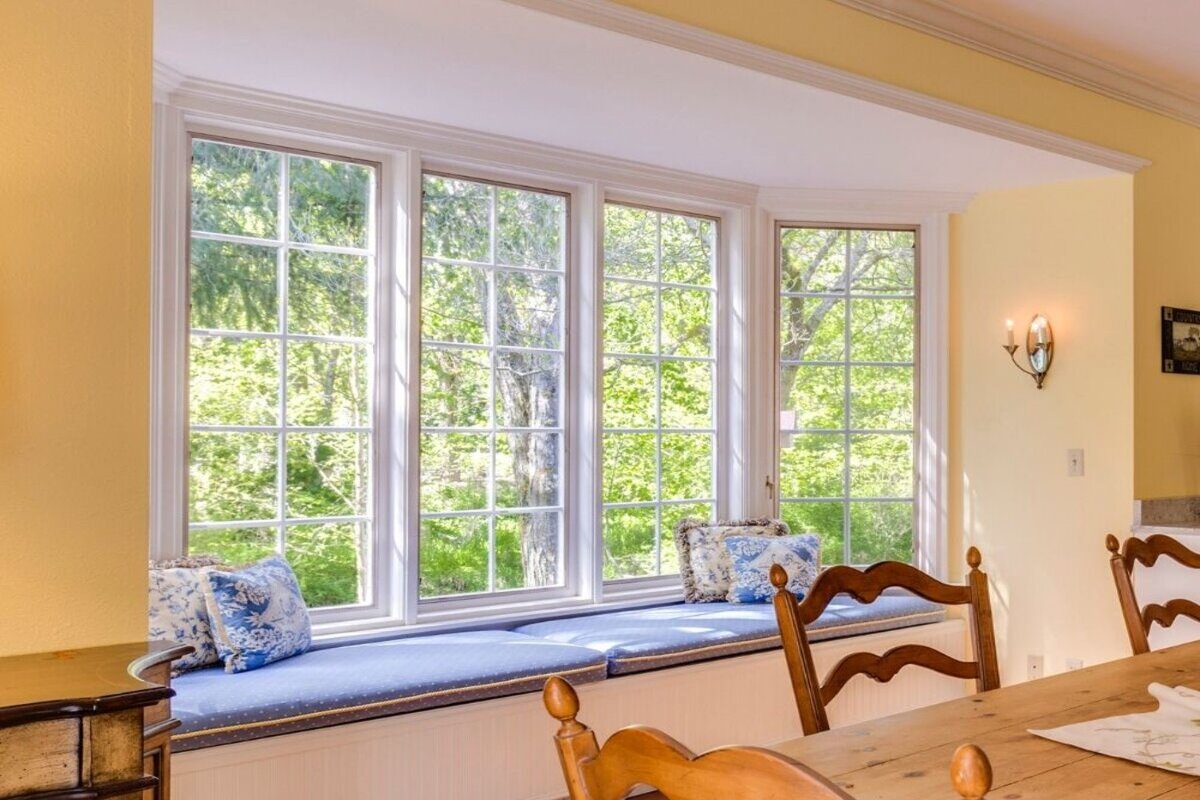
The difference between a bow window and a bay window becomes clear when shape, airflow, window seat depth, and exterior appearance are reviewed side by side. Each design affects how the window looks from the outside and how it functions once installed. A clear understanding of these factors helps set expectations early and supports accurate planning before moving forward with window replacement or exterior updates.
Understanding Bow Window and Bay Window Design
The most noticeable difference between these two window styles is shape. Each design creates a distinct exterior profile and interior feel.
Bay Window Shape and Angles
A bay window is built using defined angles. It typically includes a flat window across the front, or a flat section made up of multiple windows, with wing windows on each side. Those side windows are commonly set at angles such as 25, 30, or 45 degrees.
This angular layout creates a strong projection from the home and a clear front-facing section. The angled sides also influence how air moves through the window unit.
Bow Window Shape and Curvature
A bow window forms a continuous curve from one end to the other. No matter how many windows are included, the unit maintains a smooth arc rather than sharp angles.
The curved design creates a softer exterior appearance. Instead of a flat front and angled sides, the entire window flows evenly across the opening.
Key Takeaway: Bay windows use sharp angles with a flat front. Bow windows create a smooth curve across the entire unit.
Ventilation and Airflow Differences
Ventilation is one of the functional differences homeowners notice after installation.
Airflow in Bay Windows
Bay windows usually provide better ventilation. Because of the angled side windows, venting units are commonly placed on the sides. These angles allow wind to hit the openings more directly.
This layout supports more effective air movement through the window when the side panels are operable.
Airflow in Bow Windows
Bow windows do not receive direct wind in the same way. The curved shape changes how air contacts the glass, which can lead to some variation in circulation.
Ventilation is still possible, but airflow tends to be less direct compared to angled designs.
Pro Tip: If airflow is a top priority, bay-style layouts typically support better circulation due to their side angles.
Need expert help with window replacement? Contact Energy Pro for a free consultation.
Natural Light and Interior Seating
Light performance and seating are often part of the decision process.
Natural Light Performance
Both window styles allow the same amount of light. The glass area remains comparable whether the unit is curved or angled. From a daylight standpoint, homeowners should expect similar results.
Window Seat Depth
Both styles come standard with a window seat. Traditionally, bay windows provide a deeper window seat than bow windows. The flat front and angled sides allow for more interior depth compared to a curved unit.
This difference becomes noticeable when planning how the space will be used.
Cost, Installation, and Change Flexibility
From a project standpoint, there are several similarities worth noting.
Cost Factors
The cost between the two styles is generally the same. Pricing depends on the number of windows included in the unit, not whether the design is curved or angled.
Installation Process
Installation is the same for both styles. Each unit is installed as one large assembly. There is no difference in how the window is set into the home.
Switching Between Styles
A bow can be replaced with a bay, and a bay can be replaced with a bow. The decision is not locked in by the installation method.
Choosing Based on Preference and Curb Appeal
At the end of the decision process, preference plays a major role. Both styles perform similarly in light, cost, and installation. The real difference comes down to exterior appearance, airflow behavior, and window seat depth.
Our team helps homeowners review these details clearly so the final selection aligns with the look they want from the outside of the home.
Making the Right Choice for Your Home
Both window styles follow the same installation process, cost structure, and light performance. The differences center on shape, ventilation, window seat depth, and curb appeal. If you are planning a window upgrade and want guidance based on real installation experience, contact us today. Our team at Energy Pro is ready to help you choose between a bow window and a bay window.