
Homeowners often want more light and usable space without changing their home’s footprint. Bay windows solve that problem, but choosing the wrong design can affect layout, function, and curb appeal. Understanding the different types of bay windows is essential before planning a replacement or installation.
Each bay window configuration serves a specific purpose. Size, angles, and placement all influence how the window performs inside the room and how it looks from the exterior.
What Defines a Bay Window and How It Differs From Bow Windows
A bay window projects outward from the home and typically includes a central window with angled side panels. That projection creates usable interior space and a wider view.
Bow windows are often confused with bay windows, but they form a gentle curve using four or more windows of equal size. Bay windows create sharper angles and a more defined bump-out.
Key distinctions homeowners should understand:
- Bay windows have angular sides. Bow windows are curved
- Bay windows often include operable side panels
- Bay windows create clearer interior seating or storage space
Pro Tip: If you want a window that creates a functional nook rather than just visual interest, a bay window is usually the better choice.
Common Types of Bay Windows Explained
Not every bay window works for every room or home style. Below are the most common configurations we install and where they perform best.
1. Traditional (Full) Bay Windows
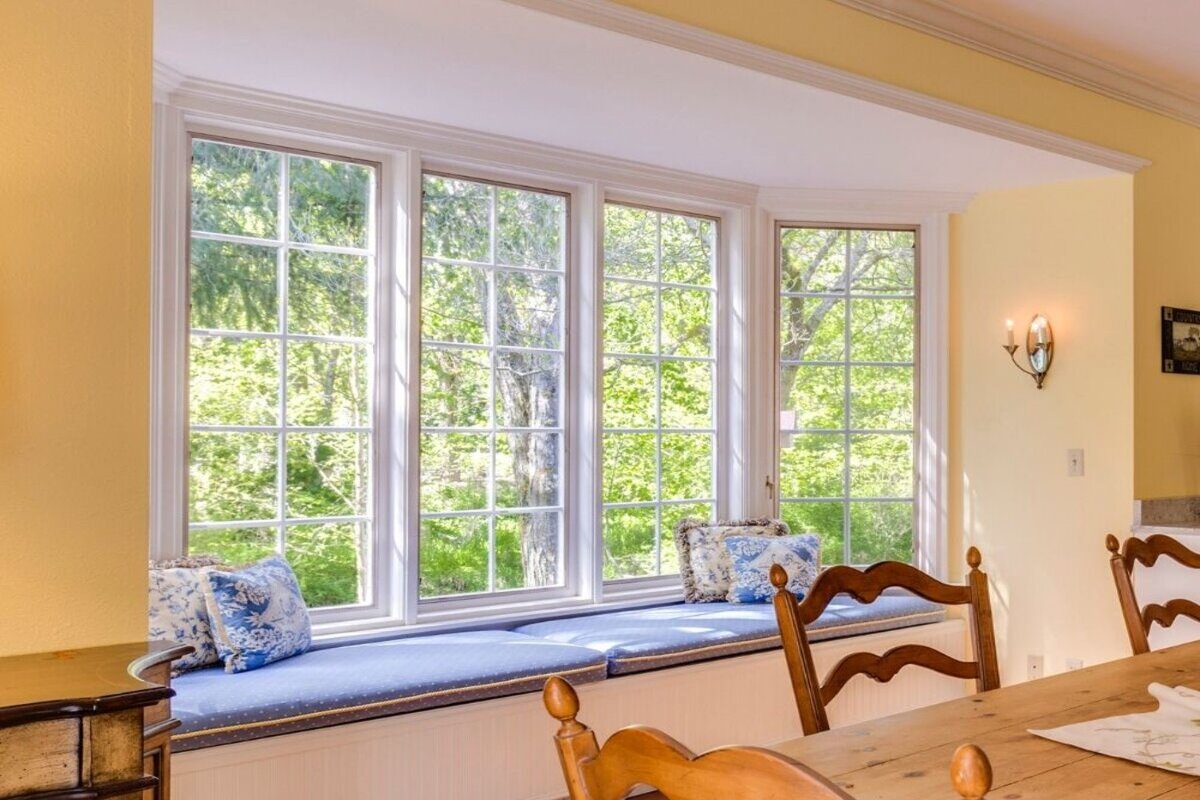
This is the classic three-window design most homeowners recognize. A large picture window sits in the center with two angled side windows.
Why homeowners choose it:
- Expands living rooms and primary bedrooms
- Works well with built-in seating or shelving
- Fits traditional home styles naturally
Best locations:
- Living rooms
- Front-facing bedrooms
2. Box Bay Windows
Box bay windows project outward at 90-degree angles instead of slanted sides. The result is a cleaner, squared-off look.
Ideal uses include:
- Kitchens
- Breakfast nooks
- Smaller dining areas
Key advantage: Adds space without a deep exterior projection.
3. Canted Bay Windows
Canted bays use more than three panels and create a wider, more dramatic projection.
When they work best:
- Large living spaces
- Homes with wide exterior wall spans
These designs create strong curb appeal and substantial interior depth.
4. Circle and Curved Bay Windows
Curved bay windows soften the exterior with a rounded shape rather than sharp angles.
Good fits for:
- Modern homes
- Transitional designs
- Reading rooms or libraries
They prioritize visual impact over seating space.
5. Oriel Bay Windows
Oriel windows project outward from upper floors and are supported by brackets rather than extending to the ground.
Common characteristics:
- Installed on second stories
- Primarily decorative
- Add architectural interest
They are less common in modern replacements but still useful in specific designs.
Need expert help with choosing or installing a bay window? Contact EnergyPro Windows for a free consultation.
Bay Window Placement by Room
Room function should guide window selection as much as appearance.
Living rooms and family rooms
- Traditional or canted bays work best
- Ideal for seating or display areas
Kitchens and dining spaces
- Box bay windows provide space for plants or banquettes
Bedrooms and reading nooks
- Traditional bays create light and usable depth
Upper-story rooms
- Oriel windows may be appropriate depending on structure
Key Takeaway: The room’s purpose should drive the bay window style, not the other way around.
Custom vs Pre-Built Bay Windows
Some homes can accommodate standard bay window units. Others require custom sizing to align with wall openings, rooflines, or interior layouts.
Pre-built options
- Faster installation
- Limited sizing and angles
Custom bay windows
- Tailored projection depth
- Better alignment with furniture and trim
- More flexibility in glass layout
How to Choose the Right Bay Window Type for Your Home
Matching Style to Architecture
Traditional homes pair well with full or canted bays. Modern homes often benefit from box or curved designs.
Considering Room Function
Ask how the space will be used. Seating, storage, or light all point toward different configurations.
How Different Types of Bay Windows Affect Room Use
Some designs add seating depth. Others favor clean lines or exterior symmetry. Our team evaluates these details before recommending a layout.
Get Help Selecting the Right Bay Window for Your Home
Choosing the right bay window involves more than appearance. It requires understanding structure, layout, and how the room will be lived in over time. Our team helps homeowners compare options, confirm fit, and install bay windows that feel intentional and well-planned.
If you are ready to explore your options or want expert guidance before committing, schedule a consultation with EnergyPro Windows to discuss the right types of bay windows for your home.